


Monday
Sep212020


Living in Light of Two Ages
____________________________
 Monday, July 27, 2020 at 02:26PM
 IV. The Seventieth Week of Daniel
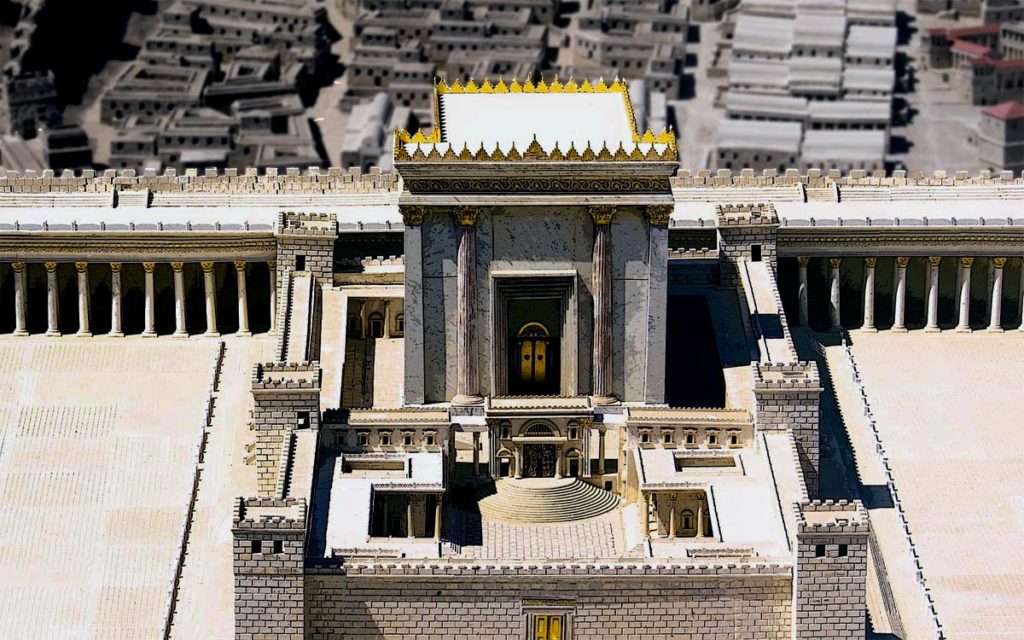
When we come to Daniel 9:27 and read of someone who makes a strong covenant with the many for one week, we have come to an interpretive fork in the road. The critical question is whether or not Daniel is speaking about a future Antichrist making a seven-year peace treaty with Israel which marks the beginning of the tribulation. Or, is Daniel instead speaking of the coming of the Messiah, who makes a strong covenant on behalf of those whom he is about to redeem at the climax of his messianic mission? The choice is fundamental as to how we understand this prophecy. Christ or the Antichrist?
As noted, Daniel 9:24-27 is one of the most disputed and difficult prophecies in all the Old Testament. But everyone does agree that it is also one of the most important of Old Testament prophecies. Although those influenced by dispensationalism see this prophecy as predicting a future seven-year tribulation period and a peace treaty between Antichrist and Israel, as I have argued, the prophecy makes much better sense when seen as a messianic prophecy, predicting the coming of Jesus (Israel’s Messiah) with great accuracy and specificity–known as the “messianic interpretation.”
We come to the final week of Daniel’s prophecy–the so-called “Seventieth Week” which is described in verse 27. “And he shall make a strong covenant with many for one week, and for half of the week he shall put an end to sacrifice and offering. And on the wing of abominations shall come one who makes desolate, until the decreed end is poured out on the desolator.” Admittedly, this is a difficult verse to translate. It also raises a number of questions. Who is this covenant maker? And what is this strong covenant? How does he put an end to sacrifices and offering? What is the “wing of abomination?” And what does it mean that the end decreed is poured out on the desolator?

The debate over the proper interpretation of this prophecy largely turns on the identity of the “he” in verse 27, i.e., the one who makes a strong covenant with the many [See the helpful survey in; Baldwin, Daniel, 191-197]. Critical scholars contend that this was written after the fact, and claim it is a reference to Antiochus IV Epiphanes. Others (including dispensationalists) see this figure as Antichrist, connecting the “he” of verse 27 with “the people of the prince who is to come” (the Romans), bringing terror down upon Jerusalem and the temple as in the previous verse (v. 26). Still others, me included, see this as a reference to the coming Messiah, who, in making a strong covenant with the many (v. 27), brings to pass the six conditions required for the prophecy to be fulfilled (v. 24).
As mentioned in the preceeding posts in this series, we are given much help in this regard in the Olivet Discourse of Matthew 24 when Jesus instructs his disciples about future events in verses 15-22: “So when you see the abomination of desolation spoken of by the prophet Daniel, standing in the holy place (let the reader understand), then let those who are in Judea flee to the mountains. Let the one who is on the housetop not go down to take what is in his house, and let the one who is in the field not turn back to take his cloak. And alas for women who are pregnant and for those who are nursing infants in those days! Pray that your flight may not be in winter or on a Sabbath. For then there will be great tribulation, such as has not been from the beginning of the world until now, no, and never will be. And if those days had not been cut short, no human being would be saved. But for the sake of the elect those days will be cut short."
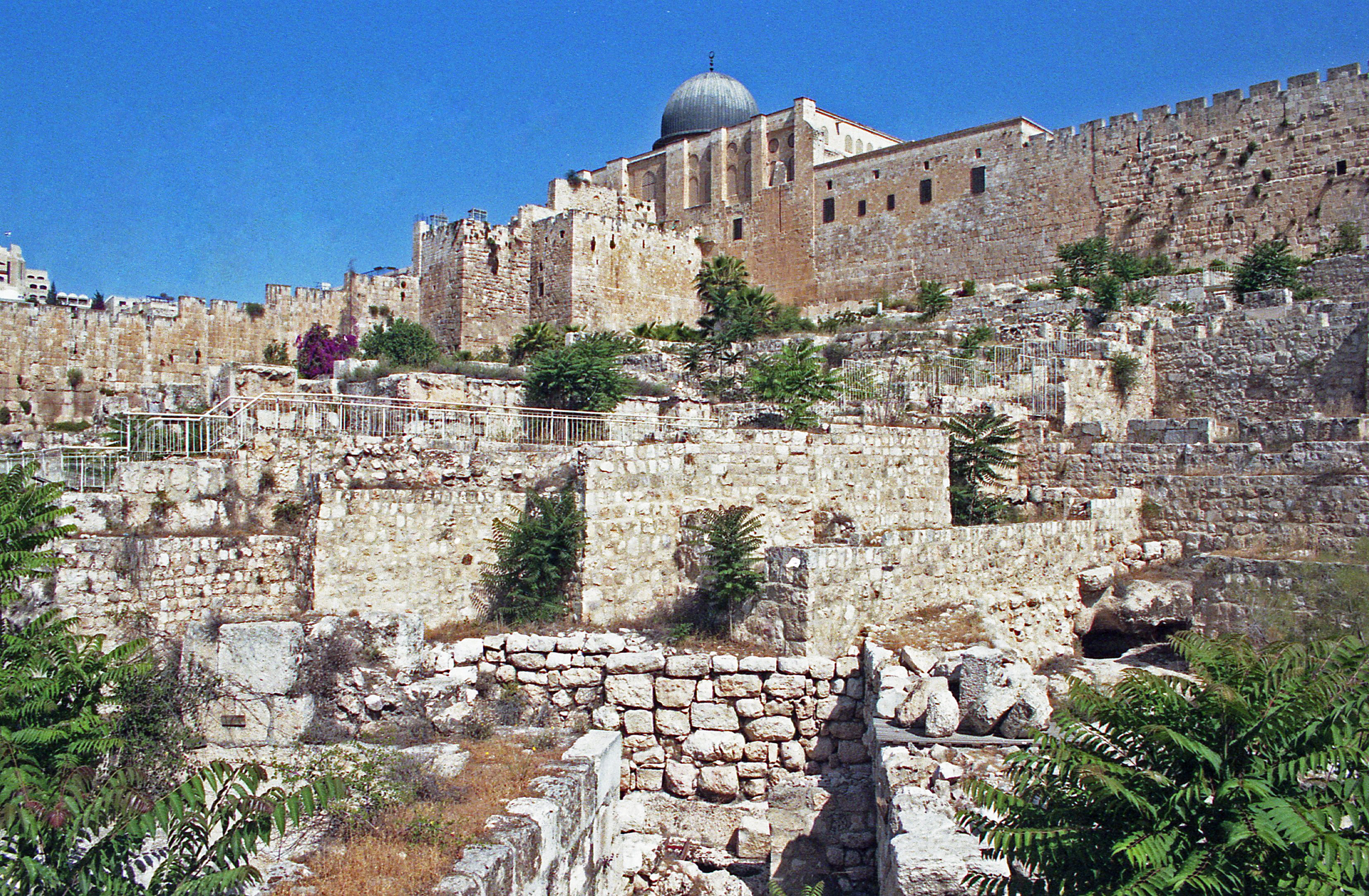
The abomination of desolation spoken of by Jesus, quoting from Daniel 9:27, is clearly that brought about by the Roman armies of Titus in A.D. 70. Jesus warns all those present in Jerusalem that this will be the worst event Jerusalem will ever experience, and includes both the final destruction of the temple and a new exile of the Jews from Judah, this time into the ends of the earth. This desolation will be so terrible, Jesus warns, that when it begins, God’s people should drop everything and flee. But the prince who brings about destruction cannot be an end-times Antichrist, because, as Jesus says, this was fulfilled by the events of A.D. 70. Titus may serve as an illustration of an end-times Antichrist (as a type of the final Antichrist to come), but as Jesus says, this portion of the prophecy (the desolation of Jerusalem and the destruction of the temple) is clearly fulfilled by the events of A.D. 70.
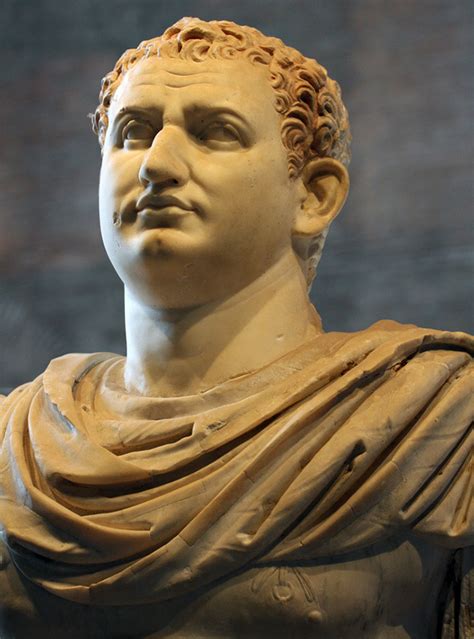 There is another reason why the “he” of verse 27 cannot be “the prince who is to come” (either Titus or a future Antichrist). For one thing, although Titus accomplished one of the two things predicted (he put an end to sacrifices by destroying the temple), he did not make a covenant with “the many.” On the other hand, the subject of the clause in v. 26 is “the people” of the prince to come, not the prince himself [Gredianus, Preaching Christ from Daniel, 306]. The people cannot make a covenant! The covenant maker does. The desolation of Jerusalem is therefore tied to the messianic age and the Roman desolation of Jerusalem, not to the time of the end.
So, what does Daniel mean when he speaks of a coming one who will make a strong covenant with many for one week”? As Meredith Kline has pointed out, the verb used by Daniel (higbîr) is not a verb associated with making a new covenant, but instead with “confirming” a covenant which is already in place–i.e., the covenant of grace first promised in Genesis 3:15, immediately after Adam fell into sin [Kline, “The Covenant of the Seventieth Week,” 464-465]. This rules out an Antichrist figure in verse 27–because the Antichrist does not confirm a covenant with Israel which already exists, but supposedly makes an altogether new agreement with the Jews at the time of the end. Instead, the covenant maker, re-affirms a covenant which is already in place with the many–a similar expression to that found in the famous messianic prophecy of a suffering servant in Isaiah 52:13-53:12 between the servant (“he”) as the “sufferer”, and those on whose behalf he performs his redemptive work (“the many”), the people of God [Young, Daniel, 213].
When the “he” of verse 27 (the one who makes a strong covenant) is connected to the “anointed one [who] shall be cut off and shall have nothing,” in verse 26, i.e., the Messiah in his death and crucifixion, the focus of the seventieth week of Daniel’s prophecy is now clear. Daniel speaks of that period of time immediately after the sixty-two weeks when Jesus begins his messianic mission. The seventieth week of Daniel centers around the redemptive work the Messiah will accomplish–“making a strong [i.e., in the sense of confirming] a covenant” with the many. This means the seventieth week (at least the first half of it) is fulfilled by Jesus and is not a future event as dispensationalists insist.
In fact, verse 27 is a direct answer to Daniel’s prayer back in verses 4-6 of this same chapter. “I prayed to the Lord my God and made confession, saying, `O Lord, the great and awesome God, who keeps covenant and steadfast love with those who love him and keep his commandments, we have sinned and done wrong and acted wickedly and rebelled, turning aside from your commandments and rules.” In answer to Daniel’s prayer, Gabriel reveals that a Messiah will come and make a strong covenant, i.e., make strong, renew YHWH’s covenant already established with his people. YHWH keeps his covenants. He even renews them. He makes them strong.
This also fits nicely with a number of parallel passages, and is clearly tied to the six requirements for the prophecy to be fulfilled spelled out in verse 24. Jeremiah speaks of seventy years of exile for Israel, but he also foretold a new covenant which supersedes a covenant already in place. In Jeremiah 31:31-34, the prophet proclaims YHWH’s promise. “Behold, the days are coming, declares the Lord, when I will make a new covenant with the house of Israel and the house of Judah, not like the covenant that I made with their fathers on the day when I took them by the hand to bring them out of the land of Egypt, my covenant that they broke, though I was their husband, declares the Lord. For this is the covenant that I will make with the house of Israel after those days, declares the Lord: I will put my law within them, and I will write it on their hearts. And I will be their God, and they shall be my people. And no longer shall each one teach his neighbor and each his brother, saying, ‘Know the Lord,’ for they shall all know me, from the least of them to the greatest, declares the Lord. For I will forgive their iniquity, and I will remember their sin no more.”
It is important to notice that Jeremiah’s prophecy is, according to the author Hebrews, fulfilled by Jesus (Heb. 8, 10). The contents of the prophecy of the new covenant also bears a striking similarity to those six things Gabriel tells Daniel that must be fulfilled before the seventy weeks run their course–finish the transgression, to put an end to sin, and to atone for iniquity, to bring in everlasting righteousness, to seal both vision and prophet, and to anoint a most holy place. Daniel 9:24-27 has strong parallels to Jeremiah’s prophecy of a new covenant and comes as no surprise, given Daniel’s prayer and his plea that YHWH remember his covenant with his people. YHWH will make a strong, new and better covenant, grounded in the blood and righteousness of Jesus Christ.
We are now in a position to see that the work of the anointed one who was “cut off” (v. 26) is also that of making a strong covenant with many for one week–i.e., in the seventieth week of Daniel’s prophecy (v. 27). This means that the prophecy of the “seventy weeks” is fulfilled by none other than Jesus Christ, who in being cut-off and making a strong covenant fulfills the conditions required in verse 24. In his messianic mission, did Jesus not come to “finish transgression?” This does not in any sense mean that people will stop sinning, but that sin will be put away as a power of rebellion, and that such sin will be hidden from YHWH’s face [Young, Daniel, 198]. Did Jesus not come to “put an end to sin?” by removing it from YHWH’s presence by taking it away through the blotting out of guilt by his shed blood? Did Jesus not come to atone for iniquity? Here, one immediately thinks of the words of Isaiah 53:4–6: "Surely he has borne our griefs and carried our sorrows; yet we esteemed him stricken, smitten by God, and afflicted. But he was pierced for our transgressions; he was crushed for our iniquities; upon him was the chastisement that brought us peace, and with his wounds we are healed. All we like sheep have gone astray; we have turned—every one—to his own way; and the Lord has laid on him the iniquity of us all."
Finishing transgression, putting an end to sin, and atoning for iniquity are all acts associated with the so-called “passive obedience” of Jesus, in which he offered up himself (allowing himself to be crucified) to satisfy the Father’s wrath and anger toward our sin. These things must be accomplished before the seventy weeks are completed. Yet, Jesus accomplished all of these things, did he not?
But there are three more elements which must be established (Christ’s so-called “active” obedience). Did Jesus not “bring in an everlasting righteousness” by his perfect obedience? Does this not secure a perfect righteousness imputed to all those who believe in Jesus? Did Jesus not come as the final prophet of YHWH (to seal vision and prophet) as Moses predicted in Deuteronomy 18:15? When Jesus came, there was no more need of prophetic revelation such as that being given to Daniel by Gabriel, because in Jesus, YHWH is fully revealed [Young, Daniel, 200]. Finally, did not Jesus’ messianic mission begin when he was baptized and received the Holy Spirit, and the most holy (Jesus–the true temple of Israel) was anointed?
All six of these things are associated with Jesus’ messianic mission and are commonly understood in Reformed theology in terms of our Lord’s passive obedience, in which he offered himself as the final and once for all sacrifice for sin, and his passive obedience, in which he actively fulfilled all Old Testament prophecy and requirements of the law. As one writer concludes, “When our Lord ascended into heaven and the Holy Spirit descended, there remained not one of these six items of Daniel 9:24 that was not fully accomplished” [Cited in Young, Daniel, 198].
But two items remain before we wrap up. The first is the sentence which closes v. 27–“And on the wing of abominations shall come one who makes desolate, until the decreed end is poured out on the desolator.” This sentence is notoriously difficult to translate but thankfully Jesus helps us here when he quotes it in reference to the Roman sack of Jerusalem and destruction of the temple in AD 70. This is a reference to Titus and his legions. The wing of a bird of prey is an image used in the prophets (Isaiah 8:8; Jeremiah 48:40; 49:22; and Ezekiel 17:3, 7) for a swift moving army, while abominations which bring desolation refer to a detested thing (the Roman army) destroying a sacred thing (the Jerusalem temple), rendering it unclean [Steinmann, Daniel, 475].
The second is the problem raised by the fact that the covenant maker will, “make a strong covenant with many for one week, and for half of the week he shall put an end to sacrifice and offering.” How is it that the Messiah is cut-off in the middle of the seventieth week, leaving three and a half years unfulfilled yet ending the sacrifices. For one thing, Titus did put an end to the sacrifices when he destroyed the temple. But when Jesus died on Calvary (was “cut-off) and while making a strong covenant with the many, recall that at very moment he died something dramatic happened in the Jerusalem temple. As we read in Matthew 27:50–51, “and Jesus cried out again with a loud voice and yielded up his spirit. And behold, the curtain of the temple was torn in two, from top to bottom. And the earth shook, and the rocks were split.” In a theological sense, when Jesus died on the cross, any further sacrifices in that temple were an abomination to YHWH. All acceptable sacrifice in the temple ceased the moment Jesus died.
But what about the remaining three and a half years of the seventieth week? The covenant maker’s work is said to extend three and a half weeks (or half of the seventieth week–3½ years), but Daniel says nothing else about this. But in the Book of Revelation, the apostle John, whose vision, in many ways, fulfills the prophecies in the Book of Daniel, speaks several times about a period of time which lasts approximately 3½ years. In Revelation 11:2-3, John speaks of forty-two months and then of 1260 days. He does the same thing in Revelation 12:6 and 13:5. In Revelation 12:14, John speaks of a “times,” “a time” and “half a time” (3½ years). John applies this time reference to circumstances after the messianic mission of Jesus ends (with his death, resurrection, and ascension), yet before Jesus returns at the end of the age to raise the dead, judge the world, and make all things new. Even though Daniel never explains the remaining three and a half years of verse 27, the Apostle John indicates that this 3½ year period is actually the time of exile of God’s people between Jesus’ first and second advents–the age of the church militant.
According to John, what remains from Daniel’s seventy weeks is the time Christ’s church remains in its wilderness exile, until Jesus returns to usher in the ultimate jubilee and the everlasting Sabbath. As Meredith Kline tells us, "since the seventy weeks are ten jubilee eras that issue in the last jubilee, the seventieth week closes with the angelic trumpeting of the earth’s redemption and the glorious liberty of the children of God. The acceptable year of the Lord which came with Christ will then have fully come. Then the new Jerusalem whose temple is the Lord and the Lamb will descend from heaven (Rev. 21:10,22) and the ark of the covenant will be seen (Rev. 11:19), the covenant the Lamb has made to prevail and the Lord has remembered."

This means that the six requirements to complete the seventy weeks decreed by YHWH are met by Jesus in his work as Israel’s Messiah, who is the covenant mediator who establishes a new covenant through his shed blood and perfect obedience. The prophecy of the seventy weeks is not about a future Antichrist or a seven-year tribulation period. Rather, it is about the covenant making Messiah, who is cut-off, thereby “finishing the transgression, putting an end to sin, atoning for iniquity, bringing in everlasting righteousness, sealing both vision and prophet, and anointing a most holy place.”
The “seventy weeks” prophecy is not a map to the end times, although the last three and a half weeks of Daniel’s seventieth week symbolically depict Jesus’ ministry from his ascension until his return. Gabriel reveals this with great accuracy, and in doing so, reminds us in no uncertain terms that there is one gospel in both testaments, and that all of redemptive history centers around the person and work of Jesus–that one who is cut-off so as to save us from the guilt and power of sin, so as to bring us to the ultimate jubilee, and grant us our eternal Sabbath rest.
The “Seventy Weeks” is a messianic prophecy, which Jesus fulfills, by making a strong covenant with the many.
"The Seventy Weeks of Daniel -- An Interpretation of Daniel 9:24-27" (Part One)
"The Seventy Weeks of Daniel -- An Interpretation of Daniel 9:24-27" (Part Two)
"The Seventy Weeks of Daniel -- An Interpretation of Daniel 9:24-27" (Part Three)
Wednesday, July 22, 2020 at 02:04PM III. Daniel’s Seventy Weeks – Introduction and Background to Daniel 9:24-27

Daniel’s prophecy of the Seventy Weeks is one of the most intriguing passages in all the Bible. It is often described by commentators as among the most difficult passages to interpret in all the Old Testament. Many of our contemporaries understand this passage as a prophetic map to the end times. But I think the passage makes much more sense when understood as a messianic prophecy foretelling the coming of Jesus, the Messiah.
Yes, the passage does tell us much about the end times in a big picture kind of way. But it does so through the lens of Jesus’ work in fulfilling the six conditions set forth in verse 24 of the prophecy: finishing transgression, putting an end to sin, atoning for iniquity, ushering in everlasting righteousness, sealing both vision and prophet, and anointing a most holy place. All six conditions were accomplished by Jesus through the strong covenant he made with the many (i.e., the people of God whom the Father chooses to save). If Gabriel’s revelation to Daniel speaks to the end times (Daniel 9:20-27), it does so in the form of a messianic prophecy, foretelling with an uncanny accuracy the suffering and obedience of the one who fulfills it–the Lord Jesus.
Like me, many readers grew up in churches influenced by dispensationalism. We learned this passage well because the prophet Daniel supposedly foresees a time (the 70th and final week of the seventy) when Israel is back in the promised land, at or about the time the Gentile church is removed from the earth (the Rapture). The Rapture also marks the dawn of the so-called seven year tribulation period, during which the Antichrist (on this scheme, the one who makes a covenant with Israel) turns upon the Jews in their rebuilt temple in Jerusalem, leading to a final battle (Armageddon) which culminates in the return of Jesus. Although this view once dominated much of American evangelicalism, this interpretation is wide of the mark for several reasons we will address in the following.
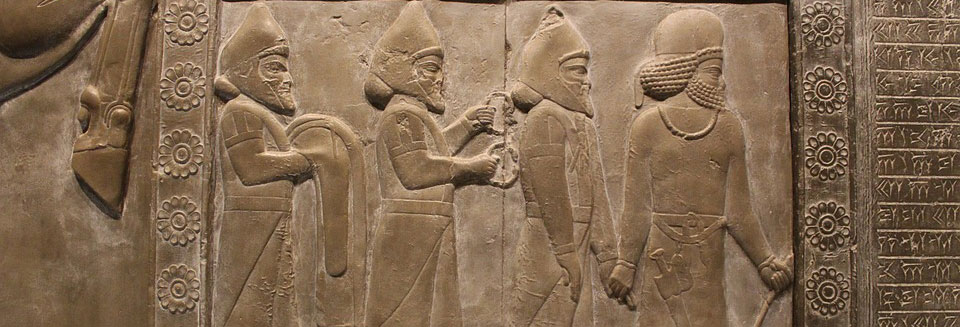
Despite the difficulty and intrigue associated with Daniel’s “Seventy Weeks,” the passage can be properly interpreted if we develop the context in which it is given, as well as considering the broader biblical theology which underlies the prophecy.
The first matter we must tackle is the meaning and chronology of the Seventy Weeks to which Daniel refers. What are these weeks? When do the weeks begin, and when do they end? Are we to take the Seventy Weeks as a literal period of time, or are they better understood symbolically in light of the previous visions recorded earlier in Daniel?
I’m specifically thinking of the visions of four great empires found in Daniel 2 (Nebuchadnezzar’s dream of a metallic statue interpreted by Daniel), and Daniel 7 (a vision given to Daniel of four great and mysterious beasts). The four metals in Nebuchadnezzar’s statue and the four beasts in Daniel’s vision predict the rise of the four great empires of the ancient near-eastern world: the Babylonian, Persian, Greek, and Roman empires. These prior visions provide the context for the vision of the Seventy Weeks–a context often overlooked by those who see the prophecy as focusing on the time of the end, instead of upon the dawn of the messianic age.
The time-frame revealed by Gabriel to Daniel serves as the box top to the puzzle, if you will. How should we understand these Seventy Weeks? Why are they broken up into periods of “seven” weeks, “sixty-two weeks,” and then one “week?" When do the weeks begin? How long are they? and when do they end?
The answer to these questions is found by looking to the context given us by Daniel in the prayer which opens the ninth chapter (vv. 1-19). The context set forth in Daniel’s prayer is decisively covenantal and indicates that the vision of the Seventy Weeks given to Daniel is a direct answer to his plea for Israel in light of the realization that Israel’s seventy years of exile in Babylon were soon to come to an end (as predicted by the prophet Jeremiah). As Daniel cries out in repentance, pleading with YHWH to remember his covenant with Israel, the angel Gabriel immediately appears (vv. 20-23) and reveals the Seventy Weeks prophecy in verses 24-27. Any attempt to make sense of the Seventy Weeks apart from the context of YHWH’s answer to Daniel’s prayer will certainly miss the mark.
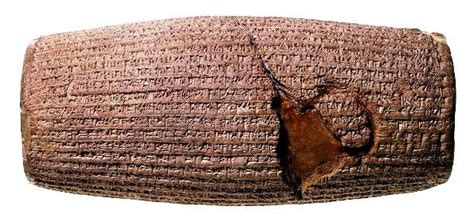
Daniel’s prayer–focusing upon the end of Israel’s exile after seventy difficult years in Babylon–is intended to remind to the people of Israel (on whose behalf Daniel is praying) of YHWH’s faithfulness in returning his people from exile back to the land of Judah as promised. YHWH is Israel’s covenant Lord who always keeps his word given to his prophets (i.e., Jeremiah). The prophecy of the Seventy Weeks is not intended to be a prediction of the dealings between Israel and Antichrist at the time of the end. Instead, it is intended to give the exiled Jews in Babylon the wonderful hope that they will indeed return to their land and rebuild the then destroyed temple of YHWH. But even as Gabriel reveals to Daniel that Israel’s exile is about to end (confirming Jeremiah’s prophecy), the Angel points beyond Israel’s current plight (exile in Babylon) to the dawn of that glorious messianic age for which Israel has longed.
As Gabriel is about reveal to Daniel, behind the seventy years which Israel (Judah) has endured in exile in Babylon, is a much greater period of exile–an exile from God’s presence when Adam and Eve were cast from Eden because of human sin and rebellion. When the Seventy Weeks are over, this greater exile will also come to an end. But as Gabriel now reveals, it will take the saving work of a Messiah to accomplish this. This end of exile is still future (to Daniel) which means the messianic age has both a beginning (the coming of Jesus) and an end (the second coming of Jesus). But there is absolutely nothing whatsoever in this prophecy about a future seven-year tribulation period, a rebuilt temple in Jerusalem at the time of the end, or an end times Antichrist, except that the Roman prince (Titus) who will desecrate the Jerusalem temple and bring about a terrible time of desolation serves as a type (a “forerunner”) of an end times Antichrist.
We will consider the Seventy Weeks decreed by YHWH in light of those often overlooked biblical passages which lay in the background of Gabriel’s revelation to Daniel. These passages would have been very familiar to Daniel, and the prophet would have made the immediate connection between Gabriel’s words, the prophecy of the Seventy Weeks, and these biblical passages, a connection which we may not be apt to make. But carefully considering these passages provides the context in which we should understand the number of years revealed by Gabriel (seventy weeks). This will take us to a discussion of Leviticus 25 and the Year of Jubilee to be celebrated in Israel in the fiftieth year after seven sevens of years (49) have elapsed. Keeping the 49 years followed by a jubilee year (the 50th year) in mind, we can look ahead and quickly figure out that seventy-sevens amounts to ten of these jubilee years followed by a final jubilee which is to be celebrated at the end of Seventy Weeks, (the ultimate jubilee, if you will).
The Jubilee Year grows directly out of Israel’s covenant with YHWH and its chief sign, the Sabbath. Sabbath observance was perhaps the most visible element of Israel’s covenant with YHWH–the people work for six days and rest on the Sabbath. Israel’s exile may be about to end (which is great news for Daniel and the exiles then living in Babylon), but the even better news coming from Gabriel is that one day there will be an ultimate jubilee when all of God’s people–those redeemed by the one who makes a strong covenant–will at long last enter their Sabbath rest in the presence of YHWH (the box top to the puzzle). The greater exile will come to an end because the guilt of human sin has been dealt with once and for all.
In verses 20-27 of Daniel 9, we learn that the time of exile is about to end. Daniel is very concerned for the future of Jerusalem and the people of God, Daniel confesses his sins and that of his people (vv. 1-19). At the end of this prayer, Gabriel appears to Daniel with an answer to the final petition offered by Daniel in verse 19: “O Lord, hear; O Lord, forgive. O Lord, pay attention and act. Delay not, for your own sake, O my God, because your city and your people are called by your name.” As Daniel prays for Jerusalem and the people of God in exile, YHWH hears and sends Gabriel with YHWH’s answer. We read in verses 20-21, “while I was speaking and praying, confessing my sin and the sin of my people Israel, and presenting my plea before the Lord my God for the holy hill of my God, while I was speaking in prayer, the man Gabriel, whom I had seen in the vision at the first, came to me in swift flight at the time of the evening sacrifice.” Daniel was able to immediately identify this angelic presence as that of Gabriel from the vision given Daniel in chapter 7.
The content of YHWH’s answer to Daniel’s prayer is the prophecy in verses 24-27. We read in verses 22-23, “[Gabriel] made me understand, speaking with me and saying, `O Daniel, I have now come out to give you insight and understanding. At the beginning of your pleas for mercy a word went out, and I have come to tell it to you, for you are greatly loved. Therefore consider the word and understand the vision.’” Daniel has spent most of his life as an exile in Babylon serving both Nebuchadnezzar and Cyrus (two of the greatest men of that age). He was given extraordinary wisdom and insight by YHWH to preserve him during this time. When Daniel intercedes for his people (almost acting as a priest), YHWH will graciously give to his servant Daniel a panoramic view of what the future holds for Israel, Jerusalem, the temple, and beyond. This revelation centers in the person and work of a coming Messiah–Jesus. In Daniel’s prayer we see the words of Jesus in Matthew 6:8 on display. “Your Father knows what you need before you ask him” [Steinmann, Daniel, 451]. God called Daniel to this life in exile, and in his grace and mercy, gives Daniel an answer to his pleas for Jerusalem. Daniel will see Israel’s future and the messianic age.
The “Seventy Weeks” vision reveals that God has already determined the fate of his people and Jerusalem. In verse 24, Gabriel tells Daniel, “seventy weeks are decreed about your people and your holy city, to finish the transgression, to put an end to sin, and to atone for iniquity, to bring in everlasting righteousness, to seal both vision and prophet, and to anoint a most holy place.” Gabriel reveals two important facts to Daniel. First, Daniel is given the precise time-frame covered in the vision--seventy-sevens. Second, Gabriel spells out those things which must be accomplished before the Seventy Weeks are complete, namely the six things to be accomplished by the covenant maker mentioned in verse 27: finishing transgression, putting an end to sin, atoning for iniquity, bringing in an everlasting righteousness, sealing vision and prophet, and anointing a most holy place. When these things are accomplished, the prophecy will have run its course.
There are two additional matters to consider in light of Gabriel’s revelation in verse 24. The first is that two important biblical passages lay behind Gabriel’s use of Seventy Weeks. A second thing we must consider are the theological themes to which these two passages speak, namely covenant, exile, jubilee, and Sabbath. As we have seen when considering Daniel’s prayer (vv. 1-19), the number seventy was used by Jeremiah in vv. 11-12 of the 25th chapter of his prophecy in reference to Israel’s time of exile. “This whole land shall become a ruin and a waste, and these nations shall serve the king of Babylon seventy years. Then after seventy years are completed, I will punish the king of Babylon and that nation, the land of the Chaldeans, for their iniquity, declares the Lord, making the land an everlasting waste.” According to Jeremiah’s prediction, Israel’s time of exile in Babylon is seventy years. This limited period of exile is YHWH’s covenant curse upon Israel because the people of Judah rebelled and disobeyed their covenant Lord though idolatry and unbelief [Kline, “The Covenant of the Seventieth Week"].
Aware that the seventy years of exile foretold by Jeremiah were coming to an end, Daniel prays for his people, pleading with YHWH to remember his covenant promise. But as becomes clear in Daniel 9:24-27, Gabriel expands this time period from seventy years of exile (for Judah) to seventy “sevens” of exile decreed by God. In this prophecy, Gabriel is speaking of time of exile much longer and quite different from that which Judah faces in Babylon and which is about to end. The Jewish exiles are about to return home and rebuild the city and temple. But a greater exile remains. This is the exile of the sinful and rebellious human race from the presence of YHWH. This far-greater exile will also come to an end after “seventy weeks.”
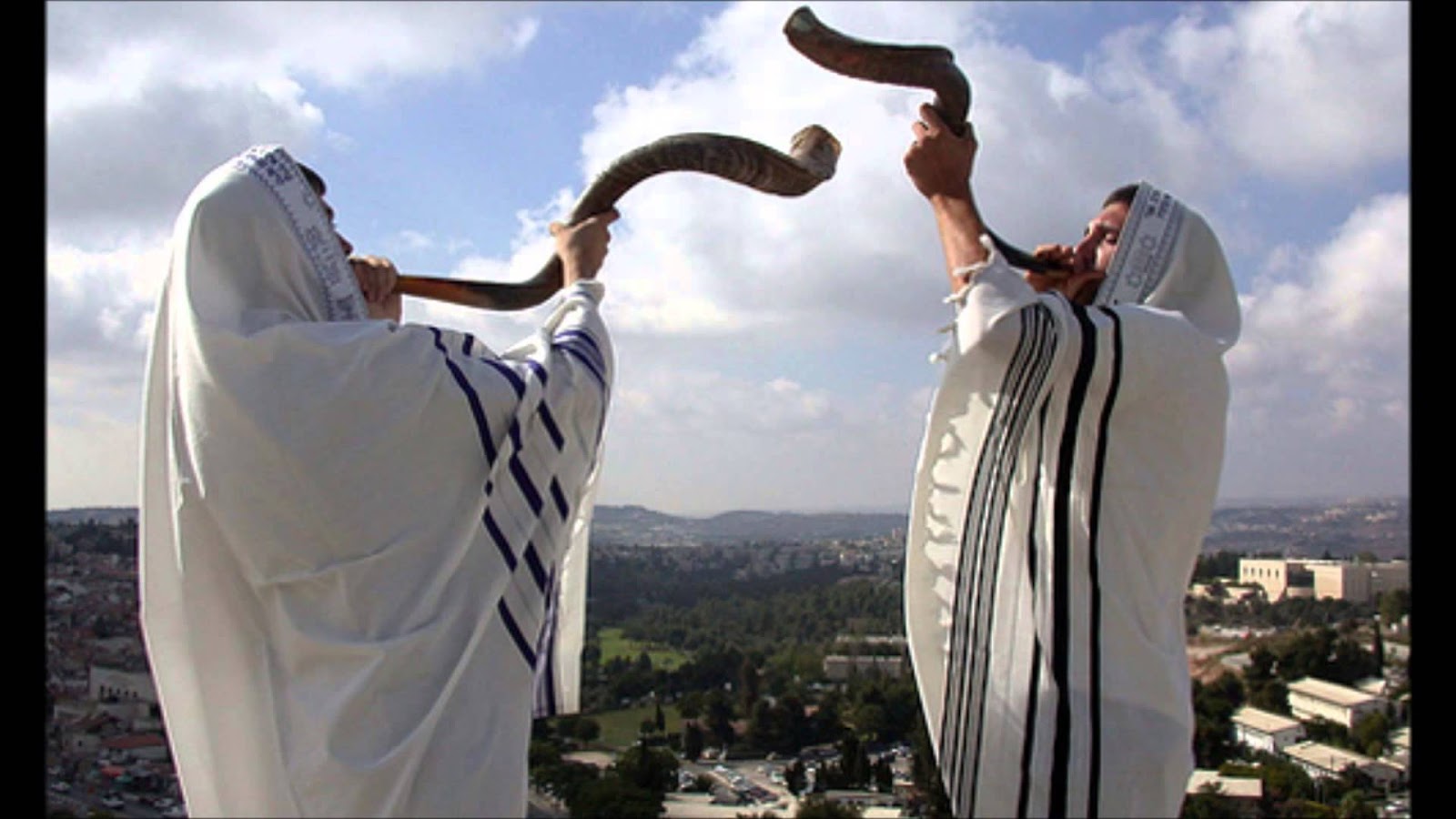
The other biblical passage which is in the background of Gabriel’s revelation to Daniel is Leviticus 25 and the institution of the Jubilee Year in Israel once the people possessed the promised land (the conquest). In Leviticus 25:8–12, we read the following: “You shall count seven weeks of years, seven times seven years, so that the time of the seven weeks of years shall give you forty-nine years. Then you shall sound the loud trumpet on the tenth day of the seventh month. On the Day of Atonement you shall sound the trumpet throughout all your land. And you shall consecrate the fiftieth year, and proclaim liberty throughout the land to all its inhabitants. It shall be a jubilee for you, when each of you shall return to his property and each of you shall return to his clan. That fiftieth year shall be a jubilee for you; in it you shall neither sow nor reap what grows of itself nor gather the grapes from the undressed vines. For it is a jubilee. It shall be holy to you. You may eat the produce of the field.”
Gabriel’s choice of seventy “sevens” clearly reflects the jubilee pattern of Leviticus 25–a pattern which reflects the covenant YHWH made with Israel at Mount Sinai to possess the land of promise. The people of Israel counted seven sevens of years, so that the fiftieth year was declared a jubilee year. When the Jubilee Year came, liberty was proclaimed throughout the land during which time the land was allowed to rejuvenate, all monetary debts were forgiven, slaves were set free, and God promised to bless both the land and his people. While this was commanded in Leviticus 25, there is no record elsewhere in the Old Testament of the Jubilee Year actually being observed. But the Jubilee Year is clearly what is in view when Gabriel speaks of seventy “sevens,” not just seven sevens.
When the Jubilee is kept in mind, it becomes clear that the seventy sevens decreed by God are ten of these jubilee cycles–ten being an ideal number when the final jubilee is realized (after the seventy sevens decreed by YHWH). No more debts will remain, all slaves will have been freed, and the land will be renewed so that it might flourish without ill-effects of the curse. Add to this the fact that the number seven has an obvious connection to the Sabbatical pattern (six days of work followed by a seventh day of rest), we are led to the inescapable conclusion that the Seventy Weeks of Daniel 9:24-27 are hardly a random number. Instead they reflect a number of important redemptive-historical themes associated with Israel’s history and expectation (covenant, exile, Sabbath, jubilee) [Kline, “The Covenant of the Seventieth Week,”]. These themes must be kept in mind as we interpret the prophecy given Daniel. When we do so, the prophecy of the Seventy Weeks is clearly a vision of God fulfilling the promised blessings by removing the ground for the covenant curse–human sin. This indicates that the prophecy is overtly covenantal and messianic in nature and points to an age after the decreed time has passed–the ultimate Jubilee and the everlasting Sabbath. To put it another way, the seventy sevens decreed by God indicates that at the end of this period of exile (when the six conditions having been fulfilled), the ultimate Jubilee will arrive along with the eternal Sabbath rest promised to the people of God.
The question which now must be addressed is, how are we to understand the seventy sevens–as literal years (70 x 7 = 490), or as a symbolic period of time? For many years, I held that Daniel was referring to the seventy sevens as literal–a span of seventy sevens of years minus the seven years of the seventieth week–the total time being 483 years. If you start with the coming of Jesus (about 30 AD) and work backward, you come up with a date about 453 BC (very close in time to the ministries of Ezra and Nehemiah). This is important because in verse 25, Gabriel tells Daniel exactly when the seventy weeks begin. “Know therefore and understand that from the going out of the word to restore and build Jerusalem to the coming of an anointed one a prince there shall be seven weeks.” Assuming that the weeks of Daniel are literal years, we are very close in time to the decree made by the Persian king Artaxerxes to Ezra to rebuild the temple in 458 BC.
But as we discover throughout the prophecy of Daniel, Ezra, and Nehemiah, the original decree allowing the Jews to leave Jerusalem and return to rebuild Jerusalem and temple as foretold by Jeremiah (and hinted at in Daniel 1:21) was given by Cyrus in 538 BC, not the decree of Artaxerxes in 458. This means the 490 years do not reflect a literal period of time, since the period of time in view is longer than 490 years. This fact pushed me to consider a symbolic reckoning of the seventy sevens [Steinmann, Daniel, 452-465]. According to Gabriel, the seventy weeks decreed begin when Cyrus issues his decree in 538 BC. Clearly, this is the event which commences the seventy weeks, not the later decree by Artaxerxes.
Although this point is easy to overlook, those who insist upon a literal interpretation of the 490 years–so that the years decreed begin in 458/445 BC (depending upon your view)–and then work ahead to Jesus’ messianic mission coming to its end about AD 30, have already violated their stated method of interpretation (understanding the prophecy “literally”) because Gabriel never refers to “years” but to “weeks” [Steinmann, Daniel, 445]. The moment you assume that the seventy “weeks” are actually “years” (because it is rather obvious Jerusalem was not rebuilt seventy weeks after Gabriel’s prophecy), you have already moved beyond a literal interpretation [Steinmann, Daniel, 452].
In light of the preceding, I think it clear that Gabriel is using the word “weeks” in a symbolic way, especially when we consider that the numbers “seven” and “seventy” reflect significant theological themes well-known to the people of Israel: exile, Sabbath, and jubilee. In this prophecy of the Seventy Weeks then, Daniel is given a panoramic vision of the future course of redemptive history which transcends and explains the original meaning of these things as understood by the Jews of his day. Gabriel’s vision reveals that when the seventy “sevens” have run their course all of the six things accomplished by the covenant maker of verse 27 will bring about an end of the exile of his people, and usher in the ultimate Jubilee and the eternal Sabbath. The point of the prophecy of the Seventy Weeks is that a Messiah is coming, and he will accomplish everything necessary for all of God’s covenant promises to become a reality as expressed in the vision given the apostle John in Revelation 21:9-27.
When the numbers are seen as symbolic and then viewed against the backdrop of the four great empires predicted in the earlier visions of Daniel 2 and 7, the prophecy comes into very sharp focus. Gabriel speaks of the coming of a “anointed prince” after a specified time, “there shall be seven weeks.” These seven weeks very likely point us the ministry of Ezra, who in 445 BC will lead the people of Judah in the rebuilding of the temple and the renewal of the sacrifices. Ezra comes from a priestly family and can trace his lineage back to Aaron (Ezra 7:1-5). The word translated as “prince” is used elsewhere by Daniel of a great leader or priestly figure (cf. Daniel 11:22) [Baldwin, Daniel, 189]. This was also the era of Nehemiah (who rebuilt Jerusalem and its walls) and the prophet Malachi, the author of the final canonical Old Testament book. After Malachi’s prophecy, YHWH fell silent until the Angel Gabriel appeared to Mary to announce that she was pregnant with the Messiah through the power of the Holy Spirit. The first “seven weeks” then, run from 538 BC until the time of Ezra, about 445 BC.
The second group of weeks (sixty-two) mentioned by Gabriel is found in verses 25-26. “Then for sixty-two weeks it shall be built again with squares and moat, but in a troubled time. And after the sixty-two weeks, an anointed one shall be cut off and shall have nothing. And the people of the prince who is to come shall destroy the city and the sanctuary. Its end shall come with a flood, and to the end there shall be war. Desolations are decreed.” Since the second group of weeks (the sixty-two weeks) commence with the rebuilding of Jerusalem (it shall be rebuilt) and run until the coming of an anointed one who will be cut-off and shall have nothing, we are on solid ground by interpreting this period of time to begin in the days of Ezra, and end with the messianic ministry of Jesus, the “anointed one” who, in his crucifixion for our sins, was “cut off” (i.e., put to death), immediately after the sixty-two weeks end [Young, Daniel, 206].
We should take note of the fact that the verb used here (“cut off”) is kārat, which is used in Genesis 15:10, 18 in regard to the covenant ratification ceremony when the animals were cut in two in Abram’s dream. The animals were “cut off” (i.e., killed) [Baldwin, Daniel, 190]. A similar verb is used by Isaiah to refer to the suffering messianic servant yet to come (Isaiah 53:8). “By oppression and judgment he was taken away; and as for his generation, who considered that he was cut off out of the land of the living, stricken for the transgression of my people?” In light of the larger purpose of the Seventy Weeks prophecy, there can be little doubt that it is Jesus who was “cut off” as a means, in part, of accomplishing the six things which bring the seventy weeks to their fulfillment [Greidanus, Preaching Christ from Daniel, 304-305].
That this sixty-two week period brings us from the days of Ezra (about 445 BC) to the time immediately before the public ministry of Jesus (30 AD), is also evident when Daniel speaks of a “prince to come” who, as a consequence of the coming of the Messiah, will destroy the city–i.e., Jerusalem, at or about the time the anointed one is “cut off” (crucified) [Young, Daniel, 207]. The historical record is clear that Roman armies, led by Titus, destroyed Jerusalem and the temple in A.D. 70. The people of Israel subsequently were driven to the ends of the earth in the great Diaspora. Jesus foretold of this in Luke 21:20, using language taken directly from Daniel 9:26. “But when you see Jerusalem surrounded by armies, then know that its desolation has come near.” What Daniel foretold, “its end shall come with a flood, and to the end there shall be war. Desolations are decreed,” is fulfilled by the Roman siege of Jerusalem in AD 70 with a frightening accuracy [Greidanus, Preaching Christ from Daniel, 305]. Desolation decreed–indeed.
The first two groups of weeks then take us from Cyrus’ decree in 538 BC until the time of Ezra about 445 BC (the “seven weeks”). The “sixty-two weeks” take us from Ezra up to the coming of Jesus (30 AD). After the sixty-two weeks end, comes the cutting off of the Messiah and the Roman sack of Jerusalem and the destruction of the temple in of AD 70. But Gabriel tells us that there remains “one week,” i.e., the seventieth week, and this week centers upon one who makes a strong covenant with the many. It is to this final week of Daniel’s prophecy we turn next time.
When YHWH hears Daniel’s prayer and sends Gabriel to reveal to Daniel the prophecy of the Seventy Weeks, we are give a truly remarkable vision of the future of Jerusalem and YHWH’s temple (both will be rebuilt). The seventy years of Israel’s exile will soon come to an end. But a greater exile remains, and Gabriel explains how YHWH will put an end to it through the coming Messiah, who will finish transgression, put an end to sin, atone for iniquity, bring in an everlasting righteousness, seal vision and prophet, and anoint a most holy place. But the Messiah (Jesus) will be cut-off (crucified) and the fourth and fiercest empire foretold in the visions in Daniel 2 and 7 (Rome), will once and for all leave Jerusalem and the temple desolate. But still, the covenant maker prevails, so the once the Seventy Weeks have run their course, we will enter the ultimate Jubilee; we owe no more debt to God due to our sin (it has been forgiven), we are set free from slavery (to sin and the sinful nature), and the heaven and earth will be restored (the land of promise in Palestine will be extended to include the whole earth). And then at last, we will enter our eternal Sabbath rest in the presence of God because our time of exile has come to an end.
This is what Gabriel reveals to Daniel in the prophecy of the Seventy Weeks–a Messiah (whom we know to be Jesus) who frees us from sin and the curse (exile) and who grants us eternal rest in the presence of the Father–the ultimate Jubilee and the eternal Sabbath.
"The Seventy Weeks of Daniel-- An Interpretation of Daniel 9:24-27" (Part Two)
"The Seventy Weeks of Daniel -- An Interpretation of Daniel 9:24-27" (Part One)
Wednesday, July 15, 2020 at 08:30AM II. The Olivet Discourse: Jesus Interprets the Prophecies of Daniel
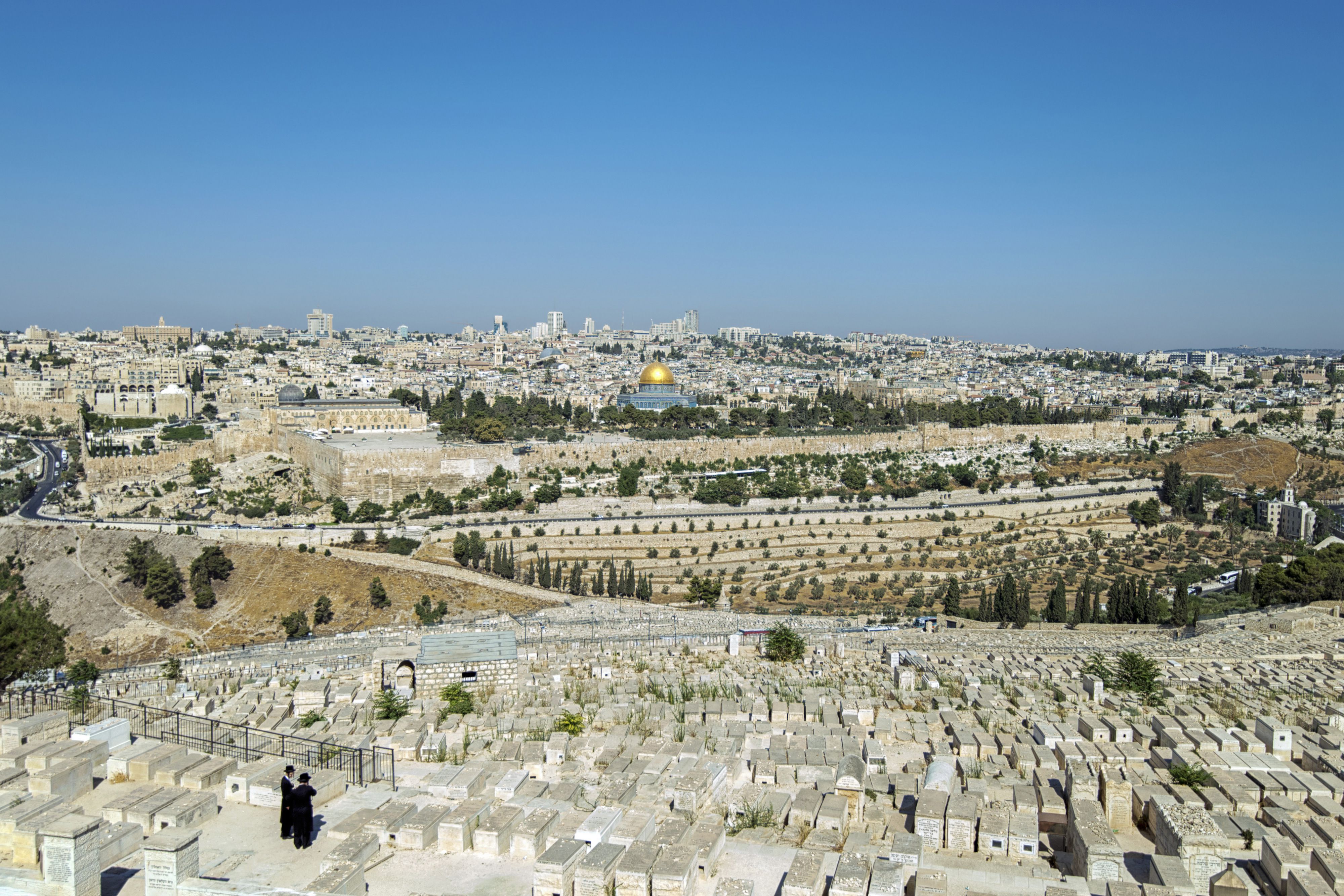
In the first section of the Olivet Discourse (Matthew 24:1-14), Jesus answers the last question the disciples put to him first. After they ask, “what will be the sign of your coming?” Jesus offers a series of signs in verses 4-14 which inform his disciples of things which they must personally endure between our Lord’s death and resurrection, and the destruction of the temple in A.D. 70. Yet, these signs also extend into the present age. These “signs of the end,” include wars and rumors of wars, earthquakes and famine, the rise of false Christs and heretics, as well as the hatred and persecution of Christ’s disciples by Gentile nations.
Jesus describes increasing wickedness yet to come throughout the age–difficult for postmillennialists and cultural transformationalists to explain. Jesus predicts that hearts will grow cold, the manifestation of innate human sinfulness. In the midst of these tumultuous signs, Jesus says, believers must persevere to the end to be saved (v. 13). But these "signs" are not signs of his absence. Rather, these signs guarantee Jesus’ return. The tumult of the nations and the groaning of the earth, are actually indicators that our Lord will return, not proof of God’s indifference to his creation or his powerlessness to do something about it.
But Jesus gives another sign, one which indicates these things extend beyond the destruction of Jerusalem into the present age. Says Jesus, the gospel must be preached to all nations before the end can come (v. 14). This becomes the mission of Christ’s church until the end of the age, as is clear from our Lord’s final instructions to his disciples recorded at the end of Matthew’s Gospel, the so-called Great Commission. “All authority in heaven and on earth has been given to me. Go therefore and make disciples of all nations, baptizing them in the name of the Father and of the Son and of the Holy Spirit, teaching them to observe all that I have commanded you. And behold, I am with you always, to the end of the age” (Matthew 28:20). With these words, Jesus gives his church its missionary mandate–go into all the world and make disciples. This mission must be completed before Jesus returns at the end of the age (v. 14).
In the second section of the Olivet Discourse (vv. 15-28), Jesus answers the disciple’s question about the destruction of the temple– “when will these things happen?” i.e., “when will the temple be destroyed?” Jesus warns them of a period of great tribulation yet to come, a time of tribulation unsurpassed in Israel's history.
Many commentators believe that the horrors of which Jesus speaks are so great that he must be referring to a distant future event associated with the Antichrist and Battle of Armageddon. But there are good reasons to think that Jesus is speaking about the events of A.D. 70–just forty years or so in the future from the time of the Discourse. Recall that the disciples’ questions are prompted by Jesus’ comments about Israel’s coming desolation and the destruction of the temple. Here we find Jesus’ answer to the disciple’s question about the destruction of the temple–especially in light of a parallel passage in Luke 21:20-21. There, Luke records Jesus telling the disciples “when you see Jerusalem surrounded by armies, then know that its desolation has come near. Then let those who are in Judea flee to the mountains, and let those who are inside the city depart, and let not those who are out in the country enter it.” A Roman siege will lead to the destruction of the city and the desolation of the temple. Jesus also switches subjects from the preaching of the gospel to the nations, to the frightening prophecy of an abomination which will render the temple “desolate.” It is clear that Jesus is describing what lies ahead for Israel (desolation), and for the temple (its destruction).
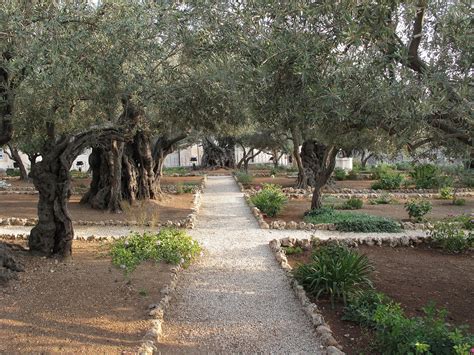
In his warning of verse 15 of Matthew 24, Jesus makes two additional prophetic predictions drawn from Daniel 9:24-27 and from Daniel 12. Both of these prophetic texts speak of an idolatrous image which will be set up on the altar of the temple at the time of the destruction of the city. It is this abominable image which renders the temple “desolate” [Hagner, Matthew 14-28, 699-700]. Says Jesus, “so when you see the abomination of desolation spoken of by the prophet Daniel, standing in the holy place (let the reader understand), then let those who are in Judea flee to the mountains.” Jesus quotes from the Seventy Weeks prophecy of Daniel 9, referring in part to Israel’s not too distant past, when Antiochus Ephiphanes profaned the temple during the Maccabean wars (in 163 B.C.) by slaughtering a pig on the altar and then erecting a pagan statute in the Holy of Holies.
Every Jew knew this story from Israel’s history. They also knew what such an abomination entailed–the temple was rendered “unclean.” Jesus evokes this familiar image to characterize what will happen to the temple yet again, only this time in such a way to make the profanation of the temple by Antiochus pale by comparison.
When Jesus evokes the prophecies in Daniel 9 and 12, in effect, he claims to be the true interpreter of Daniel’s mysterious vision. He now tells the disciples (and us) that the prophecies of Daniel regarding this terrible abomination are yet future, and were not completely fulfilled by the events of 163 BC. Jesus warns his disciples, when you see this abomination standing in the temple, rendering it unclean, “let the reader understand.”
This is a reference to chapter 8 of Daniel’s prophecy, in which Daniel was struggling to understand the meaning of the vision God gave him about the time of the end. By adding these words, “let the reader understand,” Jesus is explaining the mysteries which Daniel revealed, but was never able to fully explain. The desolation of the temple by Antiochus is therefore but a foreshadowing of another desolation yet to come, one which does fulfill Daniel’s prophecy of the Seventy Weeks. Jesus is speaking of desolation far more horrific and explicitly connected to the coming destruction of the city of Jerusalem. This was every pious Jew’s greatest fear–the temple would become desolate and the people would be hauled off into captivity yet again, to suffer and die in a land not their own. This is what Jesus predicts. And this is what happens.
Jesus not only warns of a desecration of the temple, he also warns of a great calamity to come upon the entire nation–a calamity which comes to pass when the temple is desecrated. Says Jesus in verse 16, “then,” (at the time you see the abomination in the temple), “let those who are in Judea flee to the mountains.” The moment the temple is profaned, it is time to go! The apostolic church remembered these words of Jesus. When it became clear that Rome was going to use great force to put down the ever-growing Jewish rebellion in the latter part of AD 66-67, those Christians remaining in Jerusalem began to relocate to the hill country north of Judea, the same place where the Jews hid during the Macabbean wars [Hagner, Matthew 14-28, 701].
This crisis will come to pass quickly and the consequences will be great. In verses 17-20, Jesus warns his disciples, “let the one who is on the housetop not go down to take what is in his house, and let the one who is in the field not turn back to take his cloak. And alas for women who are pregnant and for those who are nursing infants in those days! Pray that your flight may not be in winter or on a Sabbath.” There is a loud echo in these words of the warning given to Lot, when Sodom and Gomorrah are destroyed (Genesis 19:14-15). "Don’t look back!" There are also cultural reasons for this warning as well. First century Jewish dwellings often utilized the roof area as a kind of deck-patio. If the abomination occurs when you are on your roof relaxing, don’t go down into the house to pack. Flee! Don’t even stop to pick up clothing! Things will be so dreadful that women who are pregnant, or who have small children, will have an especially difficult time. The disciples are exhorted to pray that this will not happen during bad weather (the winter) or on the Sabbath, when the Sabbath observance of many Jewish Christians would make travel very difficult [Hagner, Matthew 14-28, 701-702].
Perhaps Jesus' most troubling statement follows in verse 21: “for then there will be great tribulation, such as has not been from the beginning of the world until now, no, and never will be.” Jesus speaks of this coming tribulation as so great that nothing has or will ever equal it, past or future. A number of commentators argue that tribulation of this magnitude obviously hasn’t happened yet, and therefore cannot be referring to the events of A.D. 70. But this ignores the fact that this prophetic warning is given by Jesus to the generation then living, who will see the destruction of Jerusalem in the near future, the same people who are to flee from Jerusalem when they see the abomination in the temple!
The horrors which will come upon Jerusalem in A.D. 70, will be the worst events that Jerusalem has ever, or will ever experience. Jesus says it will be far greater than the destruction of the temple in 587 BC. It will be greater than the desolation of 163 B.C. at the hands of Antiochus Epiphanes. Desolation will fall upon the temple and the people. As a result, they will be dispersed to the end of the earth. Anyone who has read Josephus’ description of the Roman siege of Jerusalem, including the terrible famine and infant cannibalism, cannot help but be moved by the unspeakable horrors the Jewish people endured while the Roman army crushed the revolt and then burned the temple to the ground. Once the temple burned–accidentally, by the way, and against Titus’ orders–the soldiers were eager to retrieve the gold which melted and flowed down into the drainage system between the stones of the temple. The soldiers went to great effort overturn the huge stones of the burned out building to retrieve the gold. As Jesus predicted, not one stone was left standing upon another.
Yet, Jesus goes on to speak not of final judgment which comes at his Parousia [his coming] at the end of the age, but of God’s grace in restraining the evil forces which fall upon the inhabitants of Jerusalem. Says Jesus in verse 22, “and if those days had not been cut short, no human being would be saved. But for the sake of the elect those days will be cut short.” As God restrained his judgment on Sodom, because the presence of believers–i.e., the “righteous,” so too, even as Israel becomes desolate and as the temple is destroyed, God will shorten the days of judgment for the sake of his elect, a reference to Christians living in Jerusalem at the time of the cities’ destruction, and whom God will deliver, even in the midst of the judgment to come upon Israel. Israel will be cut off, the Jews dispersed. But God will preserve his people, even under the worst of circumstances.
In verse 23, Jesus returns to the theme which he addressed earlier in verse 4, the inevitable appearance of false Christs and deceivers who will plague God’s people until the end of the age and final judgment. By returning to this theme in connection with the judgment to come upon Israel, Jesus makes the point that the destruction of the temple and the city is not the Parousia, nor the end of the age. The presence of false Christs will be a threat to Christ’s church, even after the temple is destroyed [Hagner, Matthew 14-28, 704-705]. Jesus says “then if anyone says to you,” in the aftermath of the confusion generated by the great tribulation to come upon Israel, “‘Look, here is the Christ!’ or ‘There he is!’ do not believe it. For false Christs and false prophets will arise and perform great signs and wonders, so as to lead astray, if possible, even the elect, at that time.” The judgment of A.D. 70 will be a breeding ground for messianic pretenders. Christians are warned not to be taken in by them [R. T. France, Matthew, 342]. Jesus warns us, “See, I have told you beforehand. So, if they say to you, ‘Look, he is in the wilderness,’ do not go out. If they say, ‘Look, he is in the inner rooms,’ do not believe it.”
Jesus also warns of those who will come and perform amazing signs and wonders, attempting to lead God’s elect astray–those whom he has preserved from the great tribulation to come upon Israel. But, Jesus says, God’s people will be able to discern such false teachers and deceivers. Whenever someone claims to be a “Christ,” the very manner of their coming, “out in the desert,” or in some private or secret place, betrays the fact that they are liars and warns us that we are to have nothing to do with them.
More to the point, in verse 27, Jesus says his coming will not be a secret or isolated event. “For as the lightning comes from the east and shines as far as the west, so will be the coming of the Son of Man.” Our Lord’s return is no secret, but visible to the entire earth. This is problematic for those who hold to a rapture of Gentile believers (which only Christians experience). It also demonstrates the implausibility of preterism. Jesus’ point is that his own Parousia [coming] at the end of the age “will happen in such a sudden and dramatic way [that it is] incapable of being missed.” This is why we are not to listen to claims that Christ has already come–no matter how many miracles the claimants may perform. Our Lord’s return is not private, but will be witnessed by the entire world.
When the disciples asked him, “what will be the sign of his coming?” Jesus answers, "for as the lightning comes from the east and shines as far as the west, so will be the coming of the Son of Man.” There will be no secret rapture. Nor can this “coming” be limited to or fulfilled by the events of A.D. 70. Our Lord’s coming is a cosmic event, like lightening flashing across the sky. It will be impossible to miss. Jesus even tells them where his coming will take place–Wherever the corpse is, there the vultures will gather.” The image of flesh-eating birds gorging upon the dead is drawn from the Old Testament–Habbakuk 1, Job 39, Ezekiel 39–and refers to the day of judgment yet to come at the end of the age when the Son of Man returns on the clouds in glory and power [Hagner, Matthew 14-28, 707]. The coming of Jesus Christ at the end of the age, will not be something which can be missed. This is why we must not listen to reports that the Christ has come in some far away corner, or in secret.
In the third section of the Olivet Discourse (vv. 29-44 of Matthew 24) Jesus speaks directly to the question about his coming at the end of the age. Having made it clear that the destruction of the temple, while a period of unsurpassed tribulation for Israel, is not the end of the age, Jesus now answers the disciple’s question about the timing and nature of his coming in judgment (his second advent).
After describing the signs of his coming, Jesus moves on to describe his return [Ridderbos, Matthew, 447]. The issue is, “how is what follows is connected to the preceding?” As Jesus states in v. 29, “immediately after the tribulation of those days the sun will be darkened, and the moon will not give its light, and the stars will fall from heaven, and the powers of the heavens will be shaken.’” There are a number of questions here which much be answered if we are to interpret these words correctly. Is Jesus speaking of the events of the destruction of the temple in A.D. 70–immediately after the tribulation of those days–giving credence to the preterist view that the coming spoken of did occur in A.D. 70? Or is Jesus speaking of the tribulation of the entire period from the days of his death and resurrection to the destruction of the temple, and which extends on into the present age? There good reasons to embrace the latter position, and to understand Jesus as speaking about his second advent at the end of the age.
Jesus’ words echo Isaiah 13:9-11, which speak of the Day of the Lord as characterized by cosmic signs and final judgment. In the words of Isaiah–“behold, the day of the Lord comes, cruel, with wrath and fierce anger, to make the land a desolation and to destroy its sinners from it. For the stars of the heavens and their constellations will not give their light; the sun will be dark at its rising, and the moon will not shed its light. I will punish the world for its evil, and the wicked for their iniquity; I will put an end to the pomp of the arrogant, and lay low the pompous pride of the ruthless.” The picture given us by the prophet is one of a day of judgment yet to come upon the entire world, a day in which the heavens will convulse. While this can be said, in part, about the events of A.D. 70 and the destruction of the temple and Jerusalem, the words of Isaiah’s prophecy make it difficult to localize this to events surrounding the desolation of Israel. These signs are cosmic and universal and associated with final judgment. As we will see in the following, Jesus will not only echo the words of Isaiah, he will apply these words to himself.
But why would Jesus say that this coming occurs immediately after the tribulation of those days–i.e., after Israel is left desolate? As Jesus will go on to declare in verse 36, “concerning that day and hour no one knows, not even the angels of heaven, nor the Son, but the Father only.” Jesus indicates that his return, of which he is now speaking, cannot be fulfilled by the events of A.D. 70, precisely because he has just told his disciples the exact time when Jerusalem and the temple will be destroyed–when you see the abomination that makes desolate standing in the temple! When that happens it is time to flee! From verse 29 on, Jesus is speaking about an event about which no one can know the day or the hour, only his Father in heaven. This cannot be limited to the events of A.D. 70.
The reason Jesus does this is surely intentional–the tension between signs which precede his coming contrasted with the suddenness of his coming is set forth so that his people will live every moment in light of the promise of his coming because the signs of the end point to his return. And yet, not knowing the day or the hour when Jesus will come again, we are to live every moment to its fullest, going about our divinely mandated task of fulfilling the cultural mandate: marrying and raising our families, fulfilling our callings and vocations, etc. As a church, we are to take the gospel to the ends of the earth--the Great Commission. This is the same tension we find throughout the New Testament between the already and the not yet. The signs which point to the certainty of our Lord’s return stand in contrast to the teaching about suddenness and unexpected nature of his return, about which no one knows the day or the hour [C. E. B. Cranfield, The Gospel According to Mark, 402; Ridderbos, Matthew, 447 ff,]. The reason for this tension will become clear shortly.
From verse 29 on, Jesus' point is that his coming will shake the heavens, picking up on the earlier image he gave of lightening flashing from east to west in verse 27. When Jesus returns, “the sun will be darkened, and the moon will not give its light, and the stars will fall from heaven, and the powers of the heavens will be shaken.” These are cosmic signs. No one is going to miss it! No secret rapture here.
In fact, Jesus goes on to say in verse 30, that when the heavens are shaken, “then will appear in heaven the sign of the Son of Man, and then all the tribes of the earth will mourn, and they will see the Son of Man coming on the clouds of heaven with power and great glory.” Jesus will define what he means by this “sign of the Son of Man” in the next verse, but it is important to note that he is speaking of the final judgment–all the nations of the earth will mourn at the sight of his coming. In Revelation 6:15-17, we read, “then the kings of the earth and the great ones and the generals and the rich and the powerful, and everyone, slave and free, hid themselves in the caves and among the rocks of the mountains, calling to the mountains and rocks, “Fall on us and hide us from the face of him who is seated on the throne, and from the wrath of the Lamb, for the great day of their wrath has come, and who can stand?”
Jesus’ words also echo the prophecy of Zechariah 12:10-13:1. “I will pour out on the house of David and the inhabitants of Jerusalem a spirit of grace and pleas for mercy, so that, when they look on me, on him whom they have pierced, they shall mourn for him, as one mourns for an only child, and weep bitterly over him, as one weeps over a firstborn. On that day the mourning in Jerusalem will be as great as the mourning for Hadad-rimmon in the plain of Megiddo. The land shall mourn, each family by itself: the family of the house of David by itself....`On that day there shall be a fountain opened for the house of David and the inhabitants of Jerusalem, to cleanse them from sin and uncleanness.’” The nations will weep at the time Jesus appears, because it is the day of judgment, and the judge is the one whom the nations have crucified with sinful hands. Jesus died for the sins of the world (the cleansing fount), but the nations, just like Israel have rejected him. On that day they will be overcome with grief.
But what, exactly, is the sign of the coming of the Son of Man? Jesus tells us in verse 31, “he will send out his angels with a loud trumpet call, and they will gather his elect from the four winds, from one end of heaven to the other.” When Jesus speaks of this coming as occurring immediately after the tribulation of those days, this cannot be confined to God’s judgment upon Israel. The Son of Man will come in great glory. His coming will be heralded with cosmic signs and the trumpet call of God, the sign of final judgment. In that day the great prophecy of Daniel 7:13-14 will be fulfilled– “I saw in the night visions, and behold, with the clouds of heaven there came one like a son of man, and he came to the Ancient of Days and was presented before him. And to him was given dominion and glory and a kingdom, that all peoples, nations, and languages should serve him; his dominion is an everlasting dominion, which shall not pass away, and his kingdom one that shall not be destroyed.” This is that dreadful day when the trumpet sounds, and when the angels appear to gather God’s elect from the ends of the earth. This is the day when the everlasting kingdom of the “Son of Man” of Daniel’s vision comes into its fulness.
Returning to a theme he used earlier, Jesus speaks again of the fig tree. It makes a perfect object lesson in the present context. “From the fig tree learn its lesson: as soon as its branch becomes tender and puts out its leaves, you know that summer is near.” In a world dominated by agriculture, the images Jesus used were familiar and powerful. When the fig tree buds and produces leaves, summer is near, i.e., the temple and Jerusalem are soon to be destroyed and Israel left desolate. Given that the signs of the end are also present and continue on past the events of A.D. 70, the coming of the Son of Man is both immanent and inevitable, even though he himself has not yet appeared in his glory. From the fall of Jerusalem until this very moment, the universe groans, longing for the coming of the Son of Man to make all things new. The signs he has given tell that Jesus is right at the door, but that he has not yet returned because the end of the age has not yet come.
In verse 34, Jesus warns “truly, I say to you, this generation will not pass away until all these things take place.” Since Jesus has said that his coming is near, and the people listening to him will see the abomination which makes desolate standing in the holy place, so too, Jesus tells his disciples that all of these things, i.e., all of the signs of which he just spoken, including the sign of the destruction of the temple and the city will come to pass before the generation to whom Jesus is speaking passes away. If, as our dispensational friends argue, that Jesus is speaking to us at the end of the age, and that this reference to the fig tree points to the modern nation of Israel, then Jesus never does answer the disciple’s question about the destruction of the temple, but allows them to think he is doing so.
Since Israel became a nation in 1948, over sixty years have come and gone–far more than a generation. I have books from one dispensational writer defining a generation as 30 years, another as 33, another as 40. Jesus is speaking to his disciples and answering their query. He is not speaking about the birth of the modern nation of Israel. The signs of the end were present from the beginning and the temple was destroyed with Jerusalem becoming desolate exactly as he predicted. Only God in human flesh could predict the future, much less utter the following sentence–“heaven and earth will pass away, but my words will not pass away.” This is perhaps our Lord’s strongest assertion of deity yet. His words, being the word of God, will never pass away–though the heavens and the earth will. The reason Jesus can speak of the future with such certainly is because his words are the words of God.
And yet, while the signs of the end can be known and to some degree understood, the timing of our Lord’s return remains a mystery–intentionally so. Says Jesus, in words so clear to as be beyond misinterpretation, “but concerning that day and hour no one knows, not even the angels of heaven, nor the Son, but the Father only” (v. 36). If, in his incarnation and humble estate, Jesus laid aside certain divine prerogatives and chose not to know the hour of his coming, we can be sure that no one else does either. About the only time when we can be sure that the Lord will not come back is when someone sets a date predicting his return! We are all precluded from date setting, and from listening to those who do. Though certain signs precede his coming, no one knows the day or hour of his return, and anyone who says he does is either deceived or a deceiver.
In verses 37-44, Jesus comes to the reason as to why he leaves his disciples with the tension between the signs which precede his coming and the suddenness and unexpected nature of his return. God’s people are to be ready for the return of Jesus Christ. Says Jesus to us, watch! Once again, Jesus returns to the prior course of redemptive history to explain the future. “For as were the days of Noah, so will be the coming of the Son of Man. For as in those days before the flood they were eating and drinking, marrying and giving in marriage, until the day when Noah entered the ark, and they were unaware until the flood came and swept them all away, so will be the coming of the Son of Man.” In the days of Noah, God’s judgment was swift and universal–the great flood destroyed the earth and its inhabitants.
Jesus' use of the Noah story lends great weight to the fact that he is speaking of final judgment upon the wicked–not a temporal judgment upon unbelieving Israel in A.D. 70, but when the Son of Man returns at the end of the age. Though the signs of his coming are present for all to see, the nations will go about their business, oblivious to the signs of the times and the certainty of final judgment. While believers are to live life to its fullest, they also wait in eager expectation of the coming of the Son of Man. Non-Christians will be swept away in the judgment yet to come, not realizing what is happening to them until it is too late.
In verses 40-41, Jesus goes on to speak of this judgment in more detail. “Then two men will be in the field; one will be taken and one left. Two women will be grinding at the mill; one will be taken and one left.” Indifferent to the fate that is about to befall them, Jesus describes people going about their everyday activities, preoccupied by the things of this world, when they are caught unawares by his return and the judgment yet to come. Jesus will separate humanity into two categories–those who are taken away and those left behind. In light of verse 31, it is presumably believers who are “taken” to be with Jesus. These are God’s elect and are gathered from the four corners of the earth by the legions of the heavenly host who accompany the Son of Man at his coming. Jesus spoke earlier of wheat and tares growing together until the day of judgment (his return) when the tares are thrown into the fire. Jesus will continue to do this in the next chapter of Matthew (25) when he speaks of sheep and goats, one group receiving the blessings of the kingdom, the others receiving eternal judgment. From these words in the Olivet Discourse, it is clear that those left behind now face certain judgment.
In verse 42, we come to the heart of the Olivet Discourse–Jesus’ exhortation to his disciples to watch for his coming, an exhortation couched in the tension between the signs which precede his coming and the unexpected suddenness of his return. Says Jesus, in light of everything he has just told them, “Therefore, stay awake, for you do not know on what day your Lord is coming.” Rather than focus upon the date of his coming, Jesus plainly tells his disciples to concentrate on being ready at any time, since it is impossible to know that date of his coming. Watch, Jesus says. Keep vigil. Be alert.
To make this case more powerfully Jesus uses a simple analogy and then identifies himself as the mysterious “Son of Man” from Daniel’s vision. “But know this, that if the master of the house had known in what part of the night the thief was coming, he would have stayed awake and would not have let his house be broken into. Therefore you also must be ready, for the Son of Man is coming at an hour you do not expect.” Yes, signs will precede his coming. But his coming will be unexpected. Since we don’t know when the thief is coming, we must be watchful all the time, ever diligent, always prepared.
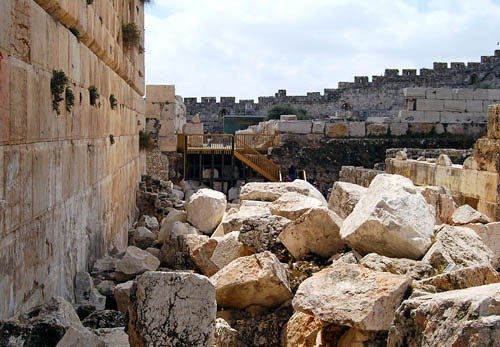
What does the Olivet Discourse tell us about Daniel's Seventy Weeks? With the advantage of two-thousand years of hindsight, we can see how Jesus’ words to his disciples came to pass exactly as foretold in Daniel 9:24-27. The nation of Israel has been cut off and left desolate, the Jews dispersed into all the earth, and only now have they returned to their ancient home. The city of Jerusalem was destroyed as was Herod’s magnificent temple by Rome’s army in A.D. 70–not one stone was left upon another–a time of tribulation unsurpassed in Israel’s history. But Jesus’ words have not passed away, the signs of the end of the age continue on to the present day. There are wars and rumors of wars. There are earthquakes, false Messiahs, and persecution and the on-going martyrdom of God’s people. The gospel is being preached to all nations just as Jesus said it would. Daniel’s prophecy points ahead to Jesus’ messianic mission, and beyond that, to the very end of the age.
Jesus’ words about his second coming are spoken in such a way as to create a tension between signs which precede his coming and the fact that his coming would be sudden and unexpected. As the disciples were to watch for the abomination which makes desolate (as foretold in Daniel 9), so too are God’s people in all ages to watch for the sign of the Son of Man (foretold in Daniel 7). For two thousand years people have gone about their business, just as it was in the days of Noah. Non-Christians see the signs of the end and laugh and scoff, "where is this coming that he promised?" But as the city of Jerusalem was laid bare and the temple utterly destroyed, so will it be in the day of judgment.
In the Olivet Discourse, Jesus leaves us with several points which reflect his interpretation of Daniel’s prophecies (including the Seventy Weeks prophecy). First, Jesus warns that Israel will be cut off, and the temple destroyed. When the temple is desecrated by Roman armies it is time for God’s people to flee to the hills. The Roman army will surround the city and crush the rebellion. It will be a time of tribulation greater than anything the nation and its temple had ever experienced or will ever experience. As a result of Israel being left desolate, the Jews will be dispersed to the ends of the earth. As Jesus tells his disciples these difficult and astonishing things, he appeals to the prophecy of Daniel written nearly six centuries earlier. In fact, these prophecies are fulfilled in such exacting detail, that critics of the Bible must go to great lengths to argue that these words were put back into Jesus’ and Daniel’s mouths after these things had come to pass. But the first-century Christians of Palestine remembered these words, and many of them left Jerusalem when they saw the Roman siege, sensing that the things of which Jesus warned them nearly forty years earlier were soon to come to pass.
Second, Jesus reminds his disciples that God will preserve his people in the midst of whatever persecution he might allow as the end draws near. The same Savior promised to return in judgment, has also promised that the Gates of Hell cannot prevail against his church. We see this in the fact that Israel’s tribulation was cut short for God’s elect and God’s people are warned in advance to flee so as to escape it. Here we see God’s grace restraining evil, even in the midst of the great tribulation. God will never give us more than we can bear and he will always provide a way of escape. This is his promise.
Third, Jesus also warns us to always be on our guard for false Christs and miracle workers, who arrive on the scene, performing signs and wonders so as to deceive God’s elect. We are not to listen to them. We are not to be taken in by them. We must resist them with the gospel. For Jesus himself says his coming will not be secret. It will not occur in some private meeting room, nor in some far away corner of the world. “For as the lightning comes from the east and shines as far as the west, so will be the coming of the Son of Man. This then, beloved is our blessed hope as we watch the signs of times, and go about our divinely mandated duty of preaching the gospel to all nations as we await the coming of the Son of Man to judge the world, raise the dead and make all things new. For when he appears in the clouds with great glory, we shall be made like him.
Finally, we will see in Daniel's Seventy Weeks prophecy a remarkable messianic promise of a coming redeemer, who will atone for sin, and bring in an everlasting righteousness. It is to this prophecy we turn next time.
Part One: The Seventy Weeks of Daniel -- An Interpretation of Daniel 9:24-27
Tuesday, July 7, 2020 at 04:06PM I. Jesus, the Temple, and the Prophecy of Daniel (The Background to Daniel's Prophecy of the Seventy Weeks)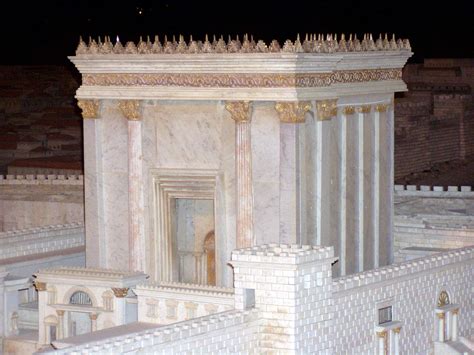 My exposition of the famous "Seventy-Weeks" prophecy of Daniel (Daniel 9:24-27) begins in what is perhaps a surprising place–the Gospel of Matthew with Jesus giving his so-called "Olivet Discourse." The discourse is so named because Jesus and this disciples were sitting on the Mount of Olives, looking across the Kidron Valley at the magnificent Jerusalem temple, restored to its original grandeur by King Herod. Jesus uses this occasion to predict the destruction of the temple and the city of Jerusalem, as well as discuss the end of the age. When passing the temple earlier that day, his disciples asked him a question about the end of the age and what would happen to this great building. Jesus told them, “you see all these, do you not? Truly, I say to you, there will not be left here one stone upon another that will not be thrown down” (Matthew 24:2). The magnificent second temple will be completely destroyed–again.
Jesus is predicting something unthinkable to a Jew of that day, since the Jewish people had endured this terrible fate once already. This time, Jesus implies, the destruction of the temple will be final. While predicting the destruction of the temple and teaching his disciples about the end of age, Jesus repeatedly appeals to the prophet Daniel. So it is here we begin our exposition of the "Seventy Weeks" prophecy of Daniel–with Jesus, on the Mount of Olives, teaching his disciples about the time of the end, all the while quoting from or alluding to Daniel’s prophecies. By considering how Jesus understood the Book of Daniel, and then spoke of his own role in fulfilling key portions of Daniel’s prophecies, we gain the proper perspective to interpret Daniel’s "Seventy Weeks" prophecy correctly.
Taking this brief if surprising detour to provide the necessary background to interpret Daniel’s widely disputed prophecy is important, because this is a difficult prophecy to interpret, especially without the proper redemptive-historical context.
Before we take up the Olivet Discourse (part two) and then turn to the Seventy Weeks prophecy (parts three and four), we begin with a bit of historical recap regarding the exile, the return from Babylon, and the rebuilding of the temple. The first Jerusalem temple (built by David and Solomon) was destroyed by the Babylonian king Nebuchadnezzar in 587 BC in the days immediately before the Babylonian exile. Daniel served in Nebuchadnezzar’s royal court and even interpreted one of the king’s dreams (Daniel 2:51 ff.). The destruction of the temple and the sacking of Jerusalem in 587 was Israel’s darkest moment, yet Jesus predicts an even darker day yet to come for Israel–a day of terrible distress foretold by Daniel (Daniel 9:26-27).
In the days of Ezra-Nehemiah–who write a century or so after Daniel–we read of how the Jews eventually returned to the land, and rebuilt their temple in 516 B.C. After four centuries of struggle and oppression by Gentile empires, by the time of Jesus, Israel’s national identity once again centered around this magnificent building. But the Jews chaffed under Roman rule. Although back in their land with a rebuilt temple, Herod's "kingdom" was nothing but a back-water vassal state in a Roman dominated world. Although a Jew, Herod was a Roman lackey. The political tensions between Herod and the Jewish people were already high when Jesus began his messianic mission.
The Jerusalem temple figures quite prominently in the last week of Jesus’ earthly ministry, because the increasingly heated conflict between Jesus and the scribes and Pharisees had escalated to the point of no return once Jesus entered the temple after his triumphal entrance into Jerusalem on Palm Sunday, only to find his messianic mission challenged and then rejected by Israel’s leaders. Though the temple pointed to the work of redemption that Jesus was about to accomplish with his death and resurrection, the Pharisees sought to keep Jesus from preaching in his Father’s house.
The tragic irony in all of this is that Israel’s spiritual condition had fallen to the same level of unbelief as in the days before the Babylonian exile. The temple had become an idol because of its grandeur. The people’s hearts are once again far from YHWH. The religious leaders trust in their rituals and in human righteousness. They think the temple, the law, religious ceremonies and festivals, and circumcision are ends in themselves. They see no need for the righteousness of Jesus Christ, thinking their own quite sufficient (cf. Romans 10:3-4). Yet, Daniel foretells of a time when an "anointed one" will come, who will usher in the very righteousness of God, to be freely given to his people, and to be received by faith alone (Daniel 9:24).
John the Baptist had come several years before Jesus began his own messianic mission, with John preaching a baptism of repentance and warning Israel that her time was nearly up. Only Herod put John to death. And now Jesus, the covenant mediator has come to dispense the covenant curses and blessings upon this nation which has rejected his messianic mission and office. In Matthew 23, Jesus pronounces covenant curses upon the Pharisees and teachers of the law, prophesying that the nation of Israel will be left desolate. Echoing the prophets, Jesus also spoke of a time of Israel's future restoration. If this was not troubling enough, Jesus also informs the disciples that the magnificent temple of Herod will be completely destroyed. They are perplexed and troubled by what they hear. They too know the prophecy of Daniel.
In addition to Jesus' warning that the covenant curses are near, and that Israel will be left desolate, it was the news about the temple which prompted the disciples to ask Jesus a series of questions about the future course of history as it relates to Israel and the temple, which Jesus answers in the Olivet Discourse. When the Discourse begins in verse 3, “as he sat on the Mount of Olives, the disciples came to him privately, saying, `Tell us, when will these things be?’” As far as the disciples were concerned, the very thought of such a calamity as the destruction of the temple must also mean that the end of the age is at hand. The disciples also ask Jesus, “what will be the sign of your coming and of the end of the age?” As they see it, the destruction of the temple and the end of the age must be one and the same event.
As the Olivet Discourse unfolds, Jesus addresses a number of important matters (especially the fate of the Jewish people, their temple, and Jerusalem), all of which are features of Daniel’s prophecy. So, I think it helpful to begin here because Daniel’s prophecy is no doubt in Jesus’ mind when giving the Olivet Discourse (Matthew 24, with its parallels in Mark 13 and Luke 21). Throughout the discourse, Jesus quotes or alludes to many prophecies found in Daniel, especially as these prophecies which impact the future role of the temple and the city of Jerusalem in redemptive history. In the Discourse, for example, Jesus refers to himself as the mysterious divine figure (the Son of Man), who is the central figure in one of Daniel’s previous visions (chapter 7). He warns of an "abomination of desolation" spoken of by Daniel (Matthew 24:15). This is why we must understand Daniel as does Jesus.
Unfortunately, the interpretation of the Olivet Discourse is highly disputed and one’s position on the meaning of Jesus' words often colors how one reads and understands the prophecies of Daniel. One such approach to the Olivet Discourse is called preterism. This view understands Jesus to be describing the judgment to come upon Israel when the Roman army destroyed the temple and sacked Jerusalem in A.D. 70. Accordingly, everything in Matthew 24, including the coming of Christ upon the clouds in glory, was fulfilled by the events of A.D. 70. However, orthodox (or "partial") preterists, do believe that the culmination of biblical prophecy is the bodily return of Jesus on the last day.
A much more popular approach, called futurism, sees much of Jesus’ explanation as referring to a time in the distant future in which Israel is back in the land with a rebuilt temple. This view, which is associated with dispensationalism and very popular among American evangelicals, understands the Olivet Discourse to be referring to a future tribulation period in which Antichrist makes a peace treaty with Israel, but then turns upon the Jews and desecrates their temple.
Both these views, futurism and preterism, mistakenly assume that the disciples are correct when in their questions to Jesus they link the destruction of the temple to the end of the age. The difference between them is that preterists locate this in the past (A.D. 70), while the futurists place this after the so-called "rapture," when Christians are mysteriously “snatched away,” when the Antichrist appears.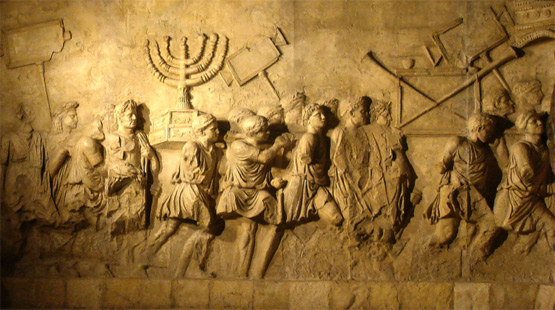
The best way to understand the Discourse is to notice that the disciples have made an incorrect, albeit understandable assumption when they question Jesus–that the destruction of the temple and the city of Jerusalem is the end of the age and must be somehow associated with the coming of Christ in the clouds with great glory. But Jesus will correct this mistaken assumption and speak of two distinct events separated by an indeterminate period of time (this is characteristic of so-called Reformed amillennialism). The first event to occur is the destruction of the city and the temple, and includes the horrible suffering of A.D. 70, after which Israel will be cut off and left desolate. The second event of which Jesus speaks is the end of the age, when the Son of Man returns in final judgment at the end of the age.
The key, then, to interpret the passage correctly, is to look at the disciple’s questions and to see how Jesus answers them (in light of Daniel’s prophecy) so as to correct their misconception about the destruction of the temple and the end of the age being the same event. As we will see from Jesus' answers, these two complexes of events (Jesus' death, resurrection, and ascension, followed by the destruction of Jerusalem and the temple in A.D. 70, and then his second coming at the end of the age) are the redemptive-historical bookends of the interadvental age.
End of Part One
Wednesday, May 20, 2020 at 02:13PM 
I was recently a guest on the "Back to the Reformation" podcast. Here's the audio.
Thursday, March 12, 2020 at 12:08PM The Conference has been postponed due to Wuhan Covid-19. Watch for updates


Thursday, January 23, 2020 at 11:36AM 
Here's the audio from our Wednesday Night Bible Study. This lecture concludes our series, "The Future."
Thursday, January 16, 2020 at 01:16PM 
Here's the audio from the Wednesday Night Bible Study: Signs of the End: What Yet Remains to be Fulfilled?" (Part Twelve)
Thursday, December 12, 2019 at 10:54AM 
Here's the audio from the Wednesday Night Bible Study: The Future: The Signs of the End
